
How to Say No with Prophylaxis
You are sitting at the board, clenched like a statue, working on the fantastic variation that will teleport you high on the rating ladder, as that is the noble dream of too many. While the plan is bordering on extraterrestrial intelligence, your analysis stops at move 1. Baby steps, you might think. But the ticking clock doesn’t let you gain weight and height in a single game of growth, so the fallen vision of coming up with a titanic setup vanishes into thin air.
It didn’t happen just once that you didn’t know how to continue the game of chess or failed to organize your neurons into a coherent structure to calculate like a pro out of this world, but what other strategy did you have left? Well, the brain could rest a bit by anticipating more. When you run out of ideas, knock on your opponent’s door and ask: What are you going to play next? The murky look will await you, but baby steps now gain strength. Once you guess the right threat, or idea to stop, one move is all you need to teleport into prevention territory (Diagram 1). The question alone is often enough to increase observation and suggest a move that changes how the position unfolds.
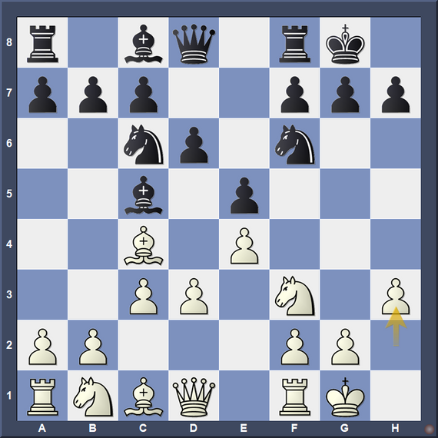 Diagram 1. In plain English, chess prophylaxis means anticipating your opponent’s ideas and stopping them before they become threats. In the classical Italian Opening, we can see that White’s move h3 serves a strong prophylactic purpose by stopping Black’s bishop (or knight) from coming to g4, while also creating an escape square for the king in order to avoid some back-rank checkmate scenarios later in the game.
Why wait for the disaster when you can try to stop it? Sometimes join it, but not required, unless the moodiness takes you there. Disasters rarely come suddenly. They are missed warnings, so keeping disaster from ever arriving is conceptually very simple (Diagram 2). Enter paranoia-free land when you’re unsure of the direction. Anxiety can calm down a bit, as the tantalizing what might happen is currently out of order and the position is just fine. Like when the world is constantly on the edge of destruction, and prophylaxis is rarely used to cancel weapons and prevent harm that is always lurking. Or it’s people that should be cancelled, not sure about this one. Skipping this important step leads to reacting too late, which we are very familiar with, and doomed to repeat again. It’s not some sort of bizarre safety that draws us there, but the absence of presence and no reality check. Did we also say we are the most intelligent beings on planet Earth? Let’s think about that again.
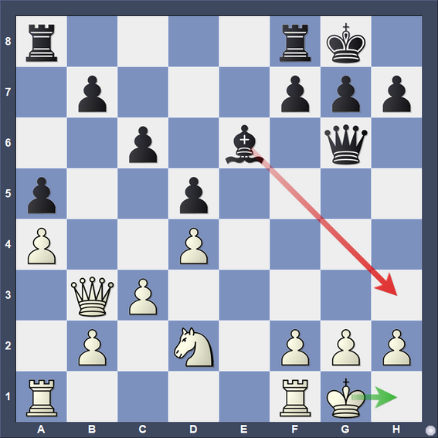 Diagram 2. While Black’s b7-pawn may seem like an easy target to collect, looking at the entire board is never a bad idea. We can spot that Black’s immediate threat is ...Bh3, which would cost White material, so he simply tucks the king away to h1, ensuring that no such threats exist anymore.
Denying your opponent possibilities lets you shape the future bright. Love the futuristic aspect very much. I’m not a fan of the past, so I apply prophylaxis and cancel the remake before its delusional scenes reach my game of life. Anticipation matters, despite them trying to keep you in the dark. Chess prophylaxis is often active, rarely depressive. Strategic. Even creative (Diagram 3). Prevention comes from an objective assessment of the position, not from unnoticed ideas or artistic considerations.
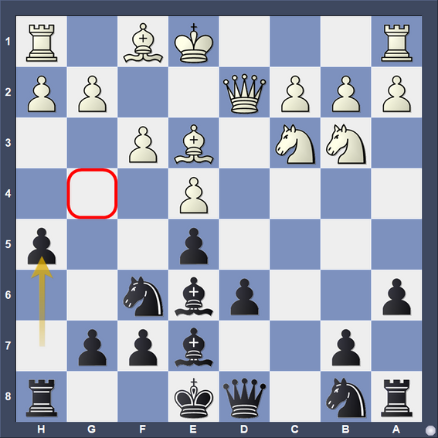 Diagram 3. Such an elegant refusal to allow White’s g4 in the Najdorf setup by playing ...h5, slowing down White’s initiative on the kingside for some time. While the complex play unfolds later, this example illustrates how anticipating an opponent’s ideas can help us find such unusual, preventative moves.
Every dangerous plan has a moment just before it becomes obvious. Prophylaxis lives in that moment, just before the click. Then the lightbulb of aha insight turns on and removes the perceived threat from the board. A good tactical move demands a response. A good prophylactic move removes the need for one (Diagram 4). Like a well-lit room, it prevents accidents simply by existing.
 Diagram 4. While Black’s dream of castling is nearly realized, he should be careful about doing it immediately, as he could become a victim of the Greek sacrifice with White’s Bh7, and the knight and queen are well aligned to join the attack. Instead, Black should play the preventative move ...h6 to stop the threat, but this move also offers rich ideas for later expanding with ...g5 and steering the game into more dynamic territory.
Then again, with every good concept we risk overusing the term, idolizing whatever seems brilliant enough to grasp. Anticipation can turn into fear, seeing ghosts and inventing scenarios where you are the main star on the edge of collapse. Everything is against you, so you try to prevent everyone from reaching you. Self-sabotage is a nice illustration of the psychology of prophylaxis gone wrong.
Dramatic confrontations lurk on the board, so you barricade your king with all your pieces, moving backward to protect the fragility you think you saw in your king. Meanwhile, the opponent grabs space and lines and lets you suffocate while you perform safety at all costs (Diagram 5). Even perfect prevention eventually fails, because guess what, it’s not enough to live life so one-sided forever. Focus on one side of the board long enough and you forget the existence of the other parts that coexist with it.
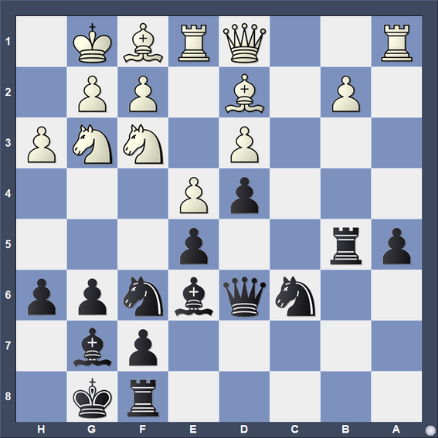 Diagram 5. This is an example of prophylaxis gone wrong for White, as an overstuffed defense around the king left White’s queenside unattended, while the crowded pieces on the kingside have little scope or purpose. Often, we tend to focus on just one side of the board, but this rarely brings good results, as a collective vision of the position is what truly prevails.
Instead of quoting definitions, it helps to think things through and write them down. That’s usually when ideas stop floating around and start making sense. That said, prophylaxis is a true acknowledgment of the inevitability of change, preparing for it before it happens. Positions transform under our guidance, but the essence remains the same. Ask what the other side wants to achieve, and if it’s a bad hunch, learn to say no in time.
 A closing thought from me to you.
You may also like
 IM datajunkie
Why your tactics aren’t improving
The 4 fixes that can help you become a tactician WGM jovanaeric
Thinking outside of the ChessBox
There is a design in the chaos. When everything is scattered, we thrive on structure. Not because it… WGM jovanaeric
Endgames In the Open
Endings force clarity. Perhaps this is why many people don’t enjoy studying or entering endgames, as… GM Avetik_ChessMood
10 Things to Give Up to Enjoy Chess Fully
Discover how embracing a lighter mindset can help you enjoy chess again and achieve better results. CM HGabor
How titled players lie to you
This post is a word of warning for the average club player. As the chess world is becoming increasin… WGM jovanaeric