
Comments on https://lichess.org/@/thecommandalorian/blog/why-engine-accuracy-is-a-waste-of-time-at-least-for-sub-2000-players/keTtDKGu

This is why the accuracy number doesn't apply to humans because that 99% didn't mean that I played like a super GM (as much as I would like to play like that) it just meant that I played solidly in an extremely simple position
thanks for the blog, if more players could improve their critical thinking overall we would see less issues and more confidence
> This is why the accuracy number doesn't apply to humans because that 99% didn't mean that I played like a super GM (as much as I would like to play like that) it just meant that I played solidly in an extremely simple position
thanks for the blog, if more players could improve their critical thinking overall we would see less issues and more confidence

One way to look at engine analysis is simply to measure divergence from the engine’s top recommendation rather than treating accuracy as a judgment of playing strength. If the engine’s suggested move does not match the move played, that can be counted as a non-engine move. White’s and Black’s non-engine moves can be counted separately, producing a ratio of non-engine moves to total moves played. This does not label moves as mistakes, inaccuracies, or blunders; it only measures how often a human choice differs from the engine’s first choice.
Accuracy percentages should be interpreted with care. A chess game is played by two players, and the more one player deviates from engine recommendations, the more accurate the other player may appear by comparison. Complex positions tend to lower accuracy because there are fewer clearly winning moves, while simple or already winning positions often inflate accuracy because many moves are evaluated as acceptable. For this reason, accuracy numbers primarily reflect comparison to an engine’s evaluation model rather than human performance or understanding.
Rather than relying on a single graphical user interface (GUI) and its specific evaluation algorithms, it can be useful to run analysis through a second GUI or engine. This helps reduce over-dependence on one evaluation model and highlights how different engines rank candidate moves. Moves can also be evaluated relative to PV1, PV2, PV3, and so on, with user-defined weighting if desired.
As an example, I sometimes reanalyze games using the Lucas Chess GUI and count how many moves do not match the engine’s top choice. I analysed a game [GameId "8lqjNL5h"] and White had 21 moves that differed from the engine’s recommendation out of 35 played, while Black had 9 such moves out of 35. I made no distinction between inaccuracies, mistakes, or blunders.
Lucas Chess GUI was showing this on my computer:
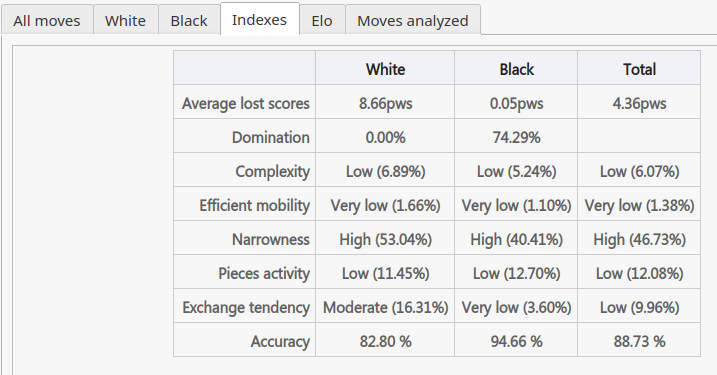
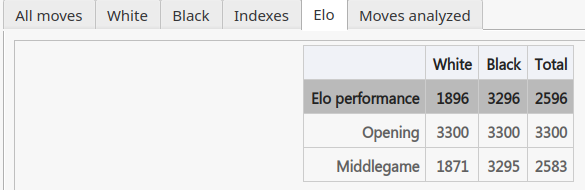
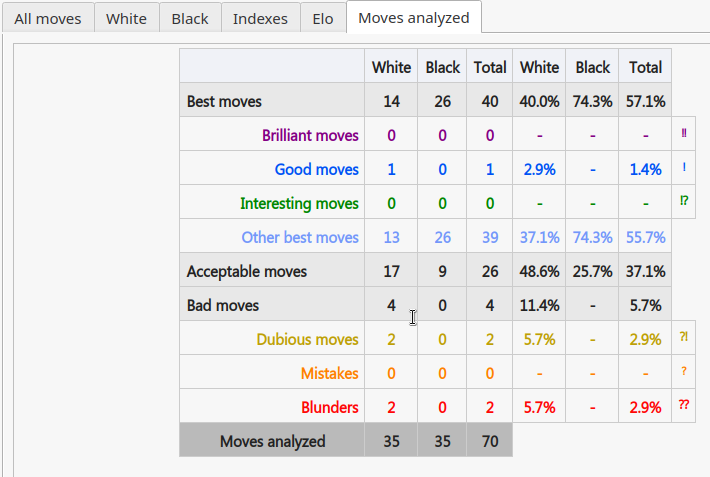
This does not indicate to me a perfect game. Accuracy algorithms attempt to provide perspective relative to an engine’s expectations, not a definitive measure of human play quality. Whether one finds these metrics useful or not depends on how they are interpreted and applied.
Chess analysis tools and GUIs represent significant work by their developers. They offer structured perspectives on games, but like any analytical tool, they reflect the assumptions and limitations of the models they are built on. How much value they provide ultimately depends on how they are used.
One way to look at engine analysis is simply to measure divergence from the engine’s top recommendation rather than treating accuracy as a judgment of playing strength. If the engine’s suggested move does not match the move played, that can be counted as a non-engine move. White’s and Black’s non-engine moves can be counted separately, producing a ratio of non-engine moves to total moves played. This does not label moves as mistakes, inaccuracies, or blunders; it only measures how often a human choice differs from the engine’s first choice.
Accuracy percentages should be interpreted with care. A chess game is played by two players, and the more one player deviates from engine recommendations, the more accurate the other player may appear by comparison. Complex positions tend to lower accuracy because there are fewer clearly winning moves, while simple or already winning positions often inflate accuracy because many moves are evaluated as acceptable. For this reason, accuracy numbers primarily reflect comparison to an engine’s evaluation model rather than human performance or understanding.
Rather than relying on a single graphical user interface (GUI) and its specific evaluation algorithms, it can be useful to run analysis through a second GUI or engine. This helps reduce over-dependence on one evaluation model and highlights how different engines rank candidate moves. Moves can also be evaluated relative to PV1, PV2, PV3, and so on, with user-defined weighting if desired.
As an example, I sometimes reanalyze games using the Lucas Chess GUI and count how many moves do not match the engine’s top choice. I analysed a game [GameId "8lqjNL5h"] and White had 21 moves that differed from the engine’s recommendation out of 35 played, while Black had 9 such moves out of 35. I made no distinction between inaccuracies, mistakes, or blunders.
Lucas Chess GUI was showing this on my computer:



This does not indicate to me a perfect game. Accuracy algorithms attempt to provide perspective relative to an engine’s expectations, not a definitive measure of human play quality. Whether one finds these metrics useful or not depends on how they are interpreted and applied.
Chess analysis tools and GUIs represent significant work by their developers. They offer structured perspectives on games, but like any analytical tool, they reflect the assumptions and limitations of the models they are built on. How much value they provide ultimately depends on how they are used.
@toscani thanks for the stats
@toscani thanks for the stats
In my own play, I tend to prioritize the king’s escape routes and piece mobility across all phases of the game. I think engines don't inherently visualize these 'escape squares' as a strategic concept; they probably just see it as raw data. Until GUI analysis tools can visually map out these mobility grids (showing us the before-and-after state of piece mobility) I have to rely on my own knowledge of chess principles to analyse my own games. Having someone else analyse them with me or for me would give me new insights. Chess principles aren't perfect, but they serve as a vital 'backup plan' when the engine's 100% accuracy is beyond human reach.
In my own play, I tend to prioritize the king’s escape routes and piece mobility across all phases of the game. I think engines don't inherently visualize these 'escape squares' as a strategic concept; they probably just see it as raw data. Until GUI analysis tools can visually map out these mobility grids (showing us the before-and-after state of piece mobility) I have to rely on my own knowledge of chess principles to analyse my own games. Having someone else analyse them with me or for me would give me new insights. Chess principles aren't perfect, but they serve as a vital 'backup plan' when the engine's 100% accuracy is beyond human reach.
@g6firste6second said in #2:
This is why the accuracy number doesn't apply to humans because that 99% didn't mean that I played like a super GM (as much as I would like to play like that) it just meant that I played solidly in an extremely simple position
thanks for the blog, if more players could improve their critical thinking overall we would see less issues and more confidence
I appreciate the support
@g6firste6second said in #2:
> > This is why the accuracy number doesn't apply to humans because that 99% didn't mean that I played like a super GM (as much as I would like to play like that) it just meant that I played solidly in an extremely simple position
>
> thanks for the blog, if more players could improve their critical thinking overall we would see less issues and more confidence
I appreciate the support
@Toscani said in #5:
In my own play, I tend to prioritize the king’s escape routes and piece mobility across all phases of the game. I think engines don't inherently visualize these 'escape squares' as a strategic concept; they probably just see it as raw data. Until GUI analysis tools can visually map out these mobility grids (showing us the before-and-after state of piece mobility) I have to rely on my own knowledge of chess principles to analyse my own games. Having someone else analyse them will me would give me new insights. Chess principles aren't perfect, but they serve as a vital 'backup plan' when the engine's 100% accuracy is beyond human reach.
This is 100% true because engines have no "opening theory knowledge" or knowledge of principles, because the only thing they do is brute force calculate any position, which is why they are immune to falling into tactics outside of maybe a small percentage with lots of 0s. Something I've learned from teaching my dad (who is a very new beginner) is that the chess.com game review doesn't help him because he gets too tripped up on inaccuracies rather than the whole game and how he played overall.
@Toscani said in #5:
> In my own play, I tend to prioritize the king’s escape routes and piece mobility across all phases of the game. I think engines don't inherently visualize these 'escape squares' as a strategic concept; they probably just see it as raw data. Until GUI analysis tools can visually map out these mobility grids (showing us the before-and-after state of piece mobility) I have to rely on my own knowledge of chess principles to analyse my own games. Having someone else analyse them will me would give me new insights. Chess principles aren't perfect, but they serve as a vital 'backup plan' when the engine's 100% accuracy is beyond human reach.
This is 100% true because engines have no "opening theory knowledge" or knowledge of principles, because the only thing they do is brute force calculate any position, which is why they are immune to falling into tactics outside of maybe a small percentage with lots of 0s. Something I've learned from teaching my dad (who is a very new beginner) is that the chess.com game review doesn't help him because he gets too tripped up on inaccuracies rather than the whole game and how he played overall.

Thanks for the blog!!!!
Thanks for the blog!!!!
Here is an example that shows why accuracy can be misleading. The accuracy percentage compares a player's moves to those of an engine that performs far above grandmaster level. Take a look at the players' ratings in this game. Both have accuracy well above 50% (84% and 91%), which seems to imply they played like the engine for much of the game. This suggests that either ratings aren't accurate, or they aren't properly calibrated against engine accuracy—or something is off.
When we buy a product, we check for defects. Chess games are similar: we should focus on blunders rather than a percentage match to perfection.
In this specific game (rapid, played today):
White (rating ~805) 84% accuracy, but with 2 blunders, 1 mistake, and 6 inaccuracies.
Black (rating ~1639) 91% accuracy, with 0 blunders, 2 mistakes, and 2 inaccuracies.
https://lichess.org/FC9ab0HU/black
Here is an example that shows why accuracy can be misleading. The accuracy percentage compares a player's moves to those of an engine that performs far above grandmaster level. Take a look at the players' ratings in this game. Both have accuracy well above 50% (84% and 91%), which seems to imply they played like the engine for much of the game. This suggests that either ratings aren't accurate, or they aren't properly calibrated against engine accuracy—or something is off.
When we buy a product, we check for defects. Chess games are similar: we should focus on blunders rather than a percentage match to perfection.
In this specific game (rapid, played today):
White (rating ~805) 84% accuracy, but with 2 blunders, 1 mistake, and 6 inaccuracies.
Black (rating ~1639) 91% accuracy, with 0 blunders, 2 mistakes, and 2 inaccuracies.
https://lichess.org/FC9ab0HU/black

Love the blog. The only reason I use engine is to check for blunders that I missed.
Love the blog. The only reason I use engine is to check for blunders that I missed.