
The Psychology of Time Trouble

5 Seconds Left on the Clock
Me and my friend Michael were enjoying the Portuguese sun, on a beach beside the Tagus River. Round 3 of the tournament was about to start, but time itself felt distant in the resort we were visiting. Was it a Monday? Wednesday? Or Saturday perhaps? Every day seemed like the weekend and you start measuring time not by the calendar but by the round you're playing that day. We were a lot more concerned about the "cheese bombs" sold in restaurants nearby, which blew us away, than the time on our watches. Perhaps this was a feature of the hot Portuguese summer, and the cultural zeitgeist there. Locals were determined to enjoy life as much as possible, take it easy, and never hurry. This was a big break from North America, where every second you're not studying or working feels like a second wasted. It should come as no surprise that we both overslept, and came late to our games.
Time management begins even before the game starts, which Grandmasters know as they prepare opening lines that may steal precious minutes at the start of their games. Classical time formats like 90+30 may seem like a long time, but it's only in the last seconds that you start regretting every minute you wasted earlier. Your perception of time throughout the game changes, and 10 minutes to make 5 moves feel a lot different from 40 minutes to make 20 moves. Your perception is skewed by the time you started with, as 2 minutes in a blitz game feel like an eternity, yet in a classical game are a cause for panic and blunders.
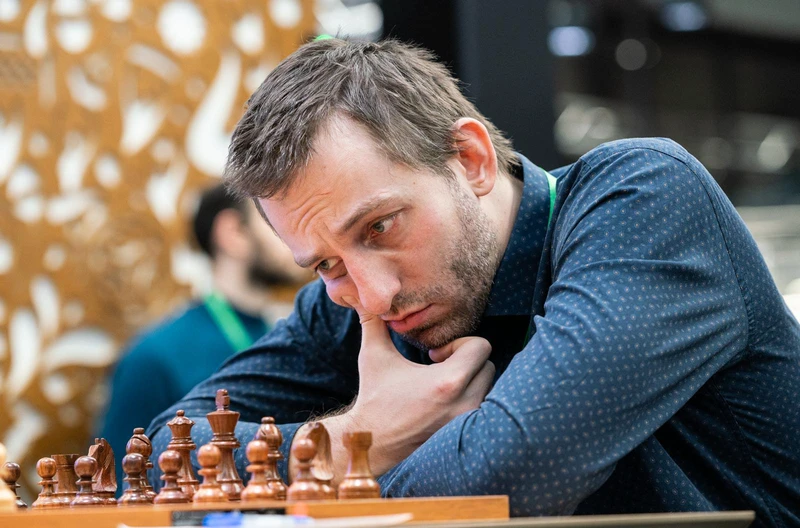
The perfectionists among us want to come up with the best move, and justify spending 20-30 minutes on a move by reassuring ourselves that 50 minutes is plenty of time. If that's not bad enough, such time usage becomes habitual as the pace of play is established. You spend 25 minutes on one move, then 12 minutes on another, a third, and soon enough this adds up into severe time pressure. If our opponents start taking their time, we are affected and start taking our time too, when we cannot afford such luxuries. This illusion of time abundance costs many half points in the long run.
4 Seconds Left...
As we approach time trouble, we get more likely to pick forcing moves over quieter ideas, partially because we're looking for certainty in a stressful situation, partially because forced moves get us closer to time control, and partially because coming up with deep positional ideas requires time that we don't have.
In this example, 29.Rxf7 is the culprit, allowing black to get a draw practically by force. 29.g3! would be the sort of unforcing unclear move that would leave black with big problems. I was approaching time trouble and didn't like how my king looked after 29.g3. Not that I saw a concrete line to refute it, but it left a double-edged position where I might have to solve some problems with time I didn't have. 29.Rxf7 on the other hand looked fun, putting the pressure on black to find defensive resources. The forcing lines I saw left white with at least a perpetual, and there was upside if black went wrong. I wanted to avoid both results uncertainty, and defensive uncertainty, even at the cost of the best move.
Because of this longing for certainty, we may avoid risky continuations even when they're good for us, because they are unclear. Moreover, we will often convince ourselves of this "unclear" evaluation because of the fear brought by time pressure. This is especially pertinent when we have to make a decision about avoiding draws:
If you had 30 seconds to decide on 41.Qxg8 or 41.Qf6 with a repetition, which one would you choose? Perhaps you've been scarred from declining draws and then losing (like the rest of us mortals) and don't want to repeat that decision if you can't calculate to the end. Now what if I gave you 5-10 minutes to think? Instead of panic, there's clarity of thought, and instead of emotional turmoil ("it'll be so painful to lose this, please let this stress end") there will be cold-blooded calculation. You'll figure out that the black pawns on the queenside will be easily stopped with the king, while the black king will never be able to touch our kingside majority which protects itself. With 30 seconds, the calculation will often be justifying repeating moves, because that's what your body wants at that moment.

3 Seconds Left ...
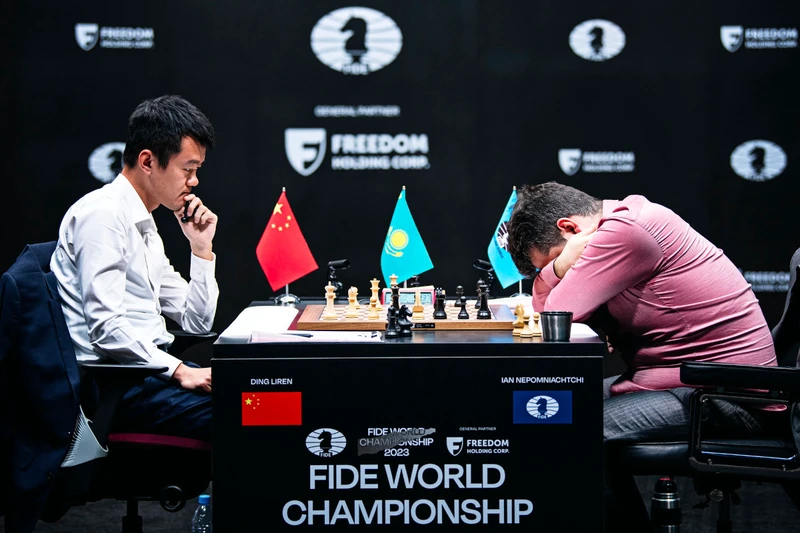
Before time trouble, there is the trouble of avoiding time trouble. You might still have a fifth of your initial time left, but the brain is already telling you to hurry up, because mysterious blunders happen when you enter the world of chess on increment. In order to save a few seconds here and there, we often play subpar/easy moves, overlooking resources we would have found 20 minutes ago. Interestingly, when our opponents start playing quick in this manner, we often mistake their haste for confidence, and the quickness of their moves for strength. Here is an extreme example:
It's important to note that 34...f5?? was only the latest in a string of second-rate moves by Nepo. How can someone that good play so bad? Using the time-stamps we can see that he was trying to stay ahead of DIng, who had frozen and lost on time earlier that match. It also seems like Nepo's strategy was, "natural moves, quickly". Instead of 28...Bb8 and 29...Rh6, there was the very strong Nf5 with the idea of Qh4. Instead of the banal 30...Rf8 there was the powerful 30...f3, going for the initiative. It may sound picky, but I contend that Nepo is very capable of finding these ideas. Yet the stress of the occasion, coupled with an evil voice in his head screaming "AVOID TIME TROUBLE!" cancelled any chance of finding first-rate moves. The final dramatic blunder was played with 19 minutes against 13, after 3 minutes' thought. "Just keep more time than him and put Ding under pressure!" Is what that move screams to me.
2 Seconds Left...
When positional pressure gets paired with time pressure, we resort back to our default programming and base instincts. We go for the familiar and don't bother to double check our ideas, leading to an unusually high number of blunders. Most chess players know about the tragedy of the 40th move, which often ruins the whole game as it's the last move before added time. But what about the 39th move? We may have enough time to solve our problems accurately but the brain is already in default setting mode, so goes for the path of least resistance. Here are some examples of move 39 blunders:
Korchnoi knew that he was better leading up to move 39, and this definitely skewed his thought process. He was likely rejecting moves like 39.g3 for the simple fact that they allowed a perpetual check with Nf3-Ne1. It looks like he reverted to default mode by matching one immediate threat at a time; "you attack the back rank, I defend the back rank". Any more obfuscated threats like 39...Nf3+! were not on his agenda. It's interesting that 39.Ra1 feels very secure as it covers squares while not weakening anything. Strong players know that you're not supposed to push pawns on the side you're weaker, so that could be another reason Victor's instinct rejected pushing the g/h pawns.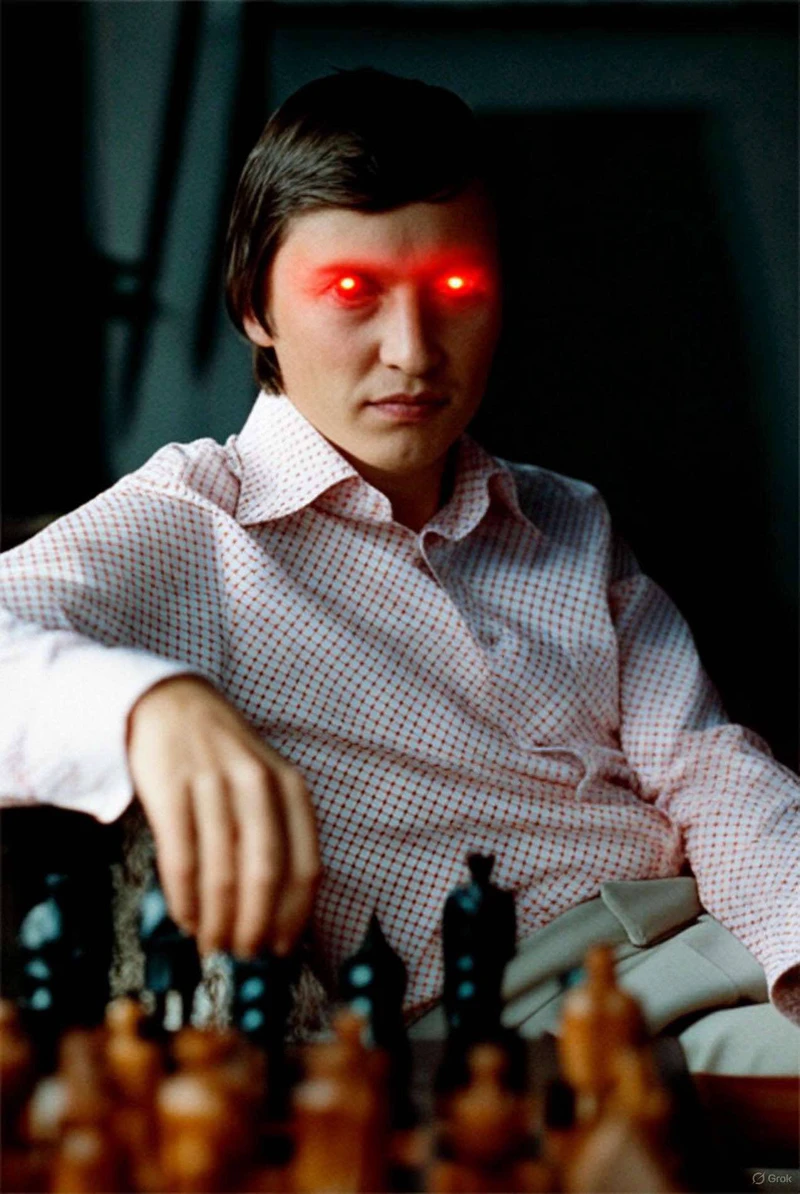
In this example, there are no problems to be solved for GM Hammer, and 39.Rd2 allowed 39...Rc1+ with mate. Nevertheless, our base programming says that if a rook is attacking two of our rooks, it should be captured automatically. In general, time pressure inspires more direct captures, perhaps because one of our base instinct is...to eat. In addition, it's rare to see the staircase mate pattern happen with an enemy rook looking at ours, somehow the brain doesn't register the pattern in the same way. It helps if you're Carlsen and no one believes that you'd blunder a mate in the first place :).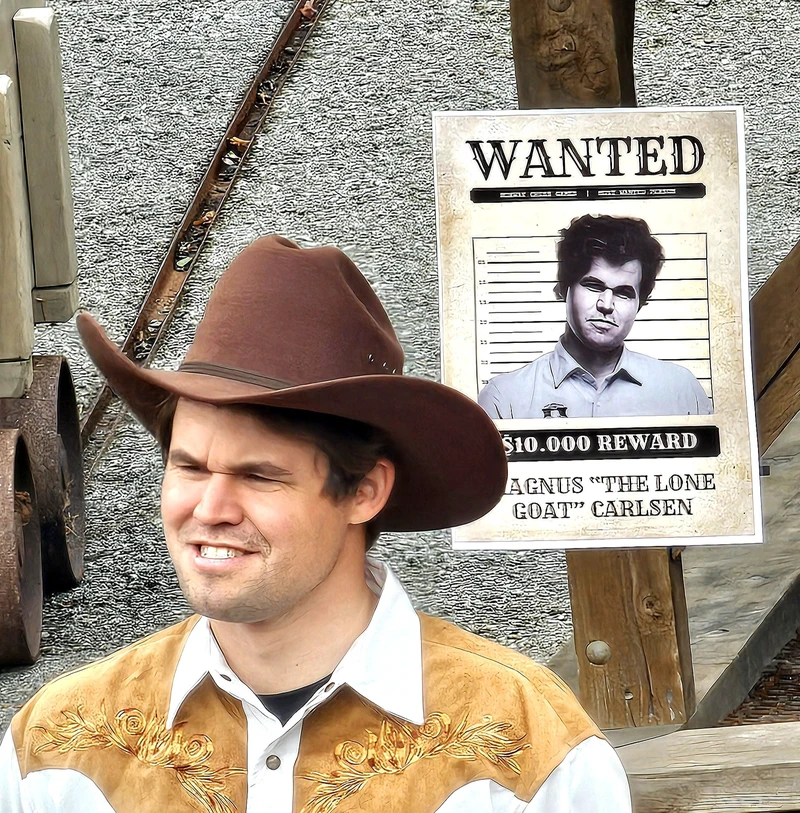
1 Second Left...
The final seconds before the time control can lead to wild decisions, as adrenaline floods your nervous system. In the face of threats (like losing on time) we often go into fight-or-flight mode, where our moves get polarized into being either very "cowardly" or very "brave". We may feel that the opportunity to strike is exclusively now, and if we delay we may never get the chance again. Much like a driver seeing a yellow light coming up fast, we feel like we have to hit one pedal or another. I find that more often than not, this idea of "now or never" is mistaken, and a normal solid move will get us over the finish line with plenty of opportunities left. In fact, players like GM Aman Hambleton who can play very quiet consolidating moves in time trouble, usually do the best in bullet/blitz.
Pay close attention to moves 35-40 and moves 55-60. In the first time trouble, 36...Re4 would win the piece on the spot, but I recaptured the pawn (what a dummy, right?). Usually I would take 30 seconds to see if there was anything else in the position, except that here there were 90 seconds left, and my mind was on default mode. Recaptures at this point were automatic, and he was playing quickly here which impacted my speed in replying.
The second critical moment was at move 58, where with a few seconds left I played the strange Re7. Just going back with the king to g7 would keep a healthy advantage, but I wanted my queen to start feasting on their weak pawns. After Ra8, I had a whole new 30 seconds to panic and wonder how a position that was so clearly better/winning for the last 40 moves could have turned into a double-edged sword with very concrete problems. On the last seconds, my fight-or-flight kicked in, leading to the very risky 59...Bxe3 allowing deadly mating threats. After Ra8 I can still hold equality with Ra7! or Kh5!! But the shell-shocked time-pressured mind doesn't see such resources. No wonder I blundered mate with 60...Re8.
We start this game with a completely losing position for black, with their only hope being mutual time trouble. Congratulations if you found the pretty 38.a6! for white, finishing the game on the spot. Yet such ideas are often missed on move 38. Moving on to 40.Bg3!? and 42.Rc1, these are typical "vague" moves you will find in time trouble. They both look threatening, yet both can be met quite easily as the threats have good replies. In time trouble we make a lot more assumptions than usual, since our brain is looking for heuristics like "Nc7+ followed by a discovery is usually good enough to win something". These assumptions are often flawed, and you should double check your opponent's rushed assumptions. After 42...b6 I felt the uptrend in the position, which now looks almost passable for black. The 'deadly' draw offer along with 10 seconds on the clock, polarized Nikolay into 43.Rxa5? which goes from winning to losing in one move. As he told me after the game, he assumed that bxa Rb1+ would be checkmate, forgetting about Nb6.
Sadly, this was not to be the last blunder that day, as I first messed up with 46...Nb3 due to autopilot mode, (Rg8 or Nxf3 followed by Rg8 would suffice for a win) and then played the caveman-like 47...Ka8, which loses on the spot due to a mating net. The logic behind Ka8 was, "His last move clearly wants me to run the king to g7 so he can do a super-fork with Nd6. So the answer must be Ka8!". This sort of poor elimination thinking which focuses mostly on the move being rejected instead of the one played, is like an ugly pimple which often comes out when stressed in time trouble scenarios.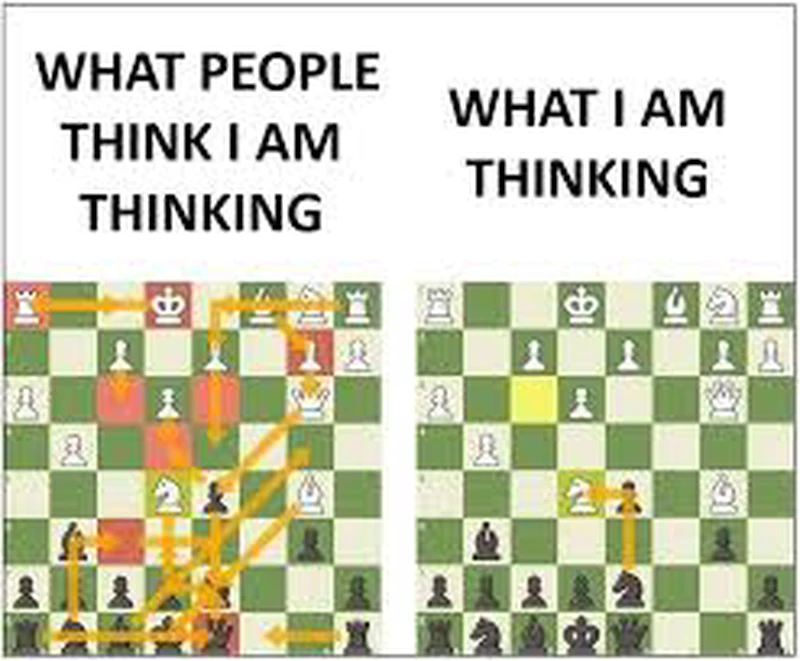
0 Seconds Left, You Lose on Time :(
Expected a happy ending? Sometimes the good guys don't win, and sometimes you will lose on time, or because of time. But don't despair, because there are some tips to help your thinking process when in time trouble. Of course, it's prudent to not get in these situations regardless, but let's just prepare for plan B:
Time Trouble Mentality
~Use your opponent's time to feverishly scan the board looking for possible dangers and opportunities. If pressure is overwhelming your thoughts, repeat the variations you see as a meditative mantra, to cast away the "spiders in your mind".
~On the opponent's turn, prepare all possible replies to their likely moves. Your replies don't have to be great, just logical moves that don't lose on the spot.
~When playing on increment, use the first 10 seconds to come up with a "safety" move so you have something to play regardless. The remainder of the time should be spent trying to look for improvements.
~Being aware of this 'need for action' around move 40 enables us to restrain ourselves and wait until we hit the second time control. A solid move 40 is statistically your best bet.
~For over the board play, write down their move and your move on their time, this is completely compliant with the rules and saves you a vital 5-10 seconds.
~Pretend like the last 1% of your time doesn't exist, even if it means playing lower-quality moves. Especially important if you're prone to panic on the last seconds.
~Be aware of your autopilot mode taking over, and take 5 seconds to check if the autopilot is driving you into a river.
~In terms of avoiding time blunders, some players hold their hand on the piece before letting go, counting on their muscle memory or the look of the move being made to save them from madness. Strong players' safety instincts often kick in at this point and they retract their move.
~I'll leave you with a paraphrased quote of Mikhail Tal; "Later, I began to succeed in important games. Perhaps because I realized a very simple truth. Not only was I worried (of losing in time trouble), but so was my opponent".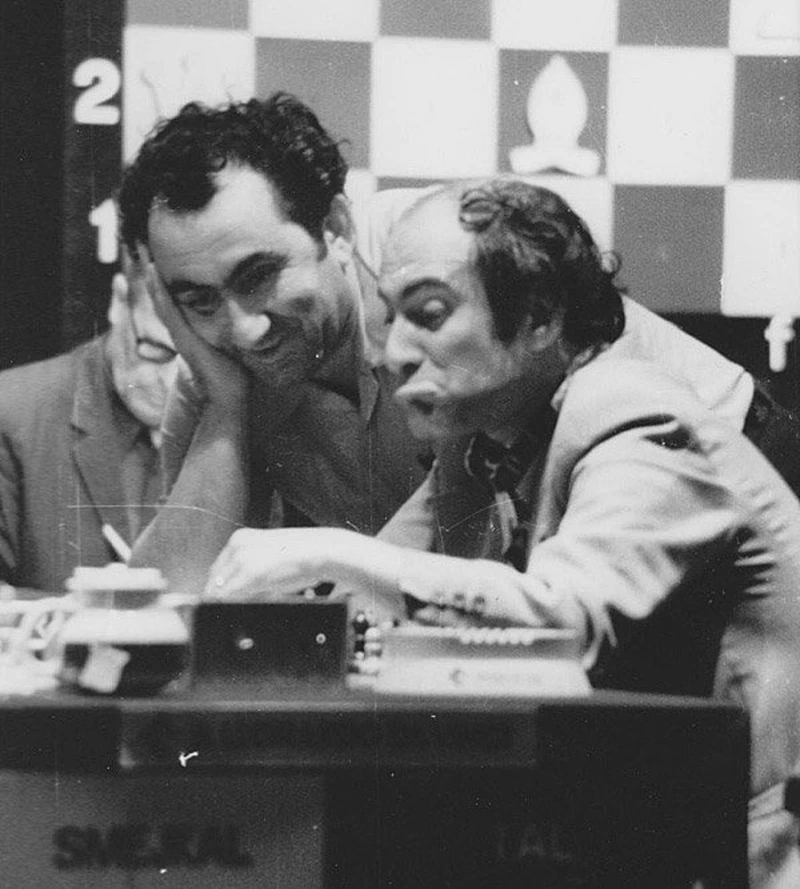
I hope you enjoyed this post.
I run an online chess school for kids and teenagers, if you're interested, you can find more details here and do a level assessment here.
We are also running summer camps in July and August.
Lastly, I just released a course on chess dynamics for club players, you can find it here.
Cheers and have a great summer!
You may also like
 ChessMonitor_Stats
Where do Grandmasters play Chess? - Lichess vs. Chess.com
This is the first large-scale analysis of Grandmaster activity across Chess.com and Lichess from 200… CM HGabor
How titled players lie to you
This post is a word of warning for the average club player. As the chess world is becoming increasin… FM MathiCasa
Chess Football: A Fun and Creative Variant
Where chess pieces become "players" and the traditional chessboard turns into a soccer field IM theScot
The Deepest Moves of All Time
A post about moves that perplex, amaze, and blow our minds IM theScot
Chess Stubbornness
A post about how chess lends itself to stubborn moves; on and off the board. GM Avetik_ChessMood