
The Berlin Endgame | Origin and Modern Practice
Have you every wondered about the intricacies of the Berlin Endgame? I wrote this blog to improve my own understanding, but also wanted to share what I learned!
Origin: The Turn of the Millenia
In the year 2000, the chess world witnessed one of the most important world championship matches in modern history: Garry Kasparov vs Vladimir Kramnik.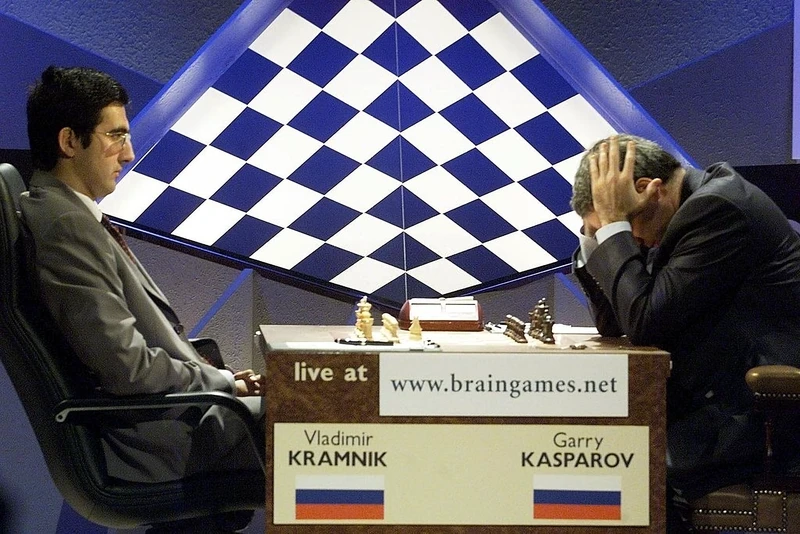
At the time, Kasparov had been a dominant World Champion for 15 years. His preparation was precise and above all of his peers, his opening repertoire was terrifying, and his sharp calculation and understanding of the initiative had crushed all challengers thus far.
Kramnik entered the match as the underdog. But he came armed with a quiet weapon that would change elite chess for decades...
The (in)famous Berlin Endgame
To understand how revolutionary Kramnik’s strategy was, we need to understand Kasparov.
Kasparov’s greatest strength was the initiative. With the white pieces, he aimed for dynamic, open positions where preparation, calculation, and attacking prowess ruled. Opponents often collapsed under the pressure before the endgame even began. Kasparov was also one of the best with opening preparation, and use of the early chess engines for this such as Fritz (first released by Chessbase in 1991)... but that would actually be a major reason for his downfall in the match.
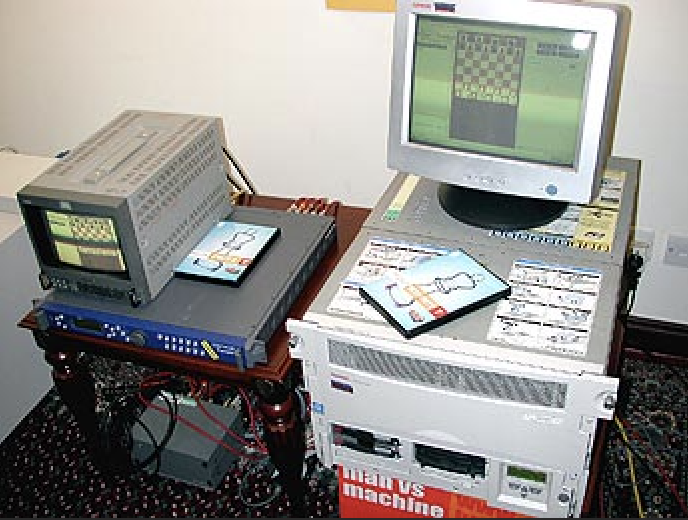 The eight-processor Compaq machine that Deep Fritz was using.
Early chess engines evaluated the Berlin endgame as clearly better for White, largely because Black’s king remained uncastled and the doubled pawns on the queenside looked like long-term weaknesses. To the computer, the position appeared strategically unpleasant and slightly passive. But Kramnik had looked far deeper long before engines caught up, he understood that with precise play, the endgame was completely holdable for Black.
Kasparov trusted his analysis and the almighty computer's judgement so much, probably influenced by his loss in the second match against IBM's Deep Blue.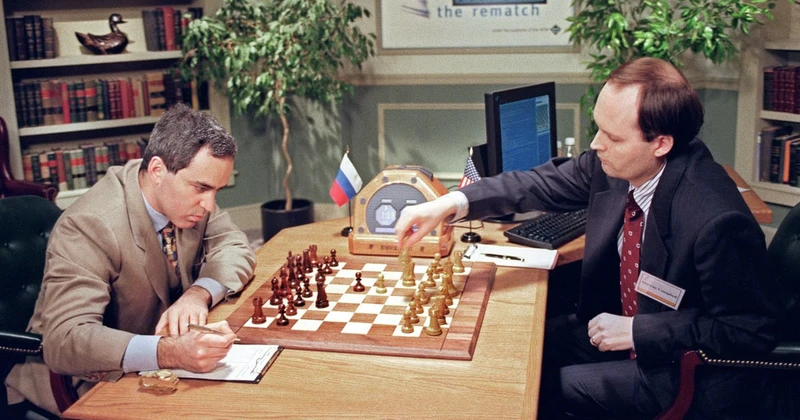
Kramnik employed the Berlin Defence in games 1, 3, 9, and 13 of the match, and all four games ended in draws.
Kramnik ended up winning the match with two wins, thirteen draws, and zero losses.
This victory made Kramnik the 14th World Chess Champion, and the ended the reign of the Beast from Baku
Since then, theory in the Berlin Defense has developed all sort of ways, as is typically seen after a World Championship match.
Modern Application: How Fabi outplayed Magnus
Now, I would like to present a very nice game played by Fabiano Caruana against Magnus Carlsen in the recent 2025 Clutch Chess Championships.
As we can see from this game, even the best player on the planet, struggled in the Berlin endgame, where Fabi's superior understanding and precision ultimately made the difference.
If you want to check out my video explaining this game and some more details, refer to this video!
https://youtu.be/cnujzzmHmtQ?si=kS74ol1E_ZvfXJgY