
Destroy the Caro Kann with style

Intro
As any chess dream, it started with Tal. I was going "teach me, daddy!" but then I woke up...
Actually, I was playing with Explorer Practice to find interesting lines and I found one that I thought was beautiful. And indeed it was, only Tal did it first, without computers and chess databases, in Riga 1986, against Lembit Oll. He built on a line against the Caro Kann now named the Karpov Variation. Tal and Karpov were the Leela and Stockfish of bygone eras. Oll wasn't a pushover, either.
Before you continue reading the blog, note that not only is this a beautiful line, but the advantage at the end isn't coming from a quick mate or material advantage in a few moves. It's purely positional. And devastating. Here is the line: 1. e4 c6 2. d4 d5 3. Nd2 dxe4 4. Nxe4 Nd7 5. Bd3 Ngf6 6. Ng5 h6 7. Ne6 Qa5+ 8. Bd2 Qb6 9. Nf3.
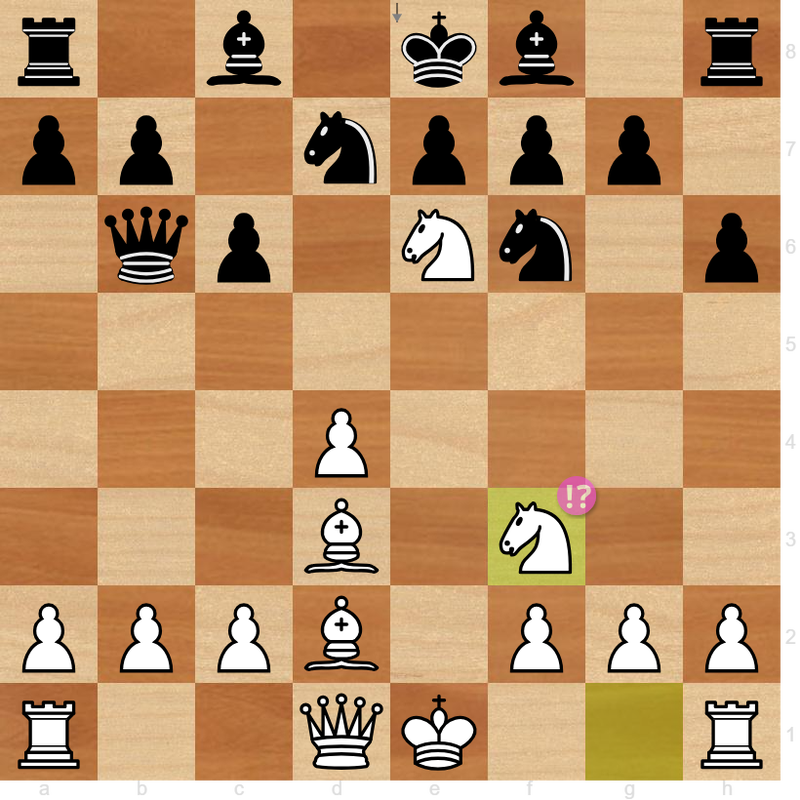
Note that the check to the White king is pretty much a mistake as it only helps White develop their dark square bishop. The only destination for the Black queen has to be b6, a safe square that is also defending c7 against a fork. Obviously, if Black were to capture the knight with the pawn before moving the queen it would be mate in 1 after Bg6.
But even when the mate threat has been eliminated, Tal just leaves his knight en prise and develops the other knight! Did he forget it was under attack? Oll thought so, therefore he captured the knight the next move, as did 85% of the more than 2000 Lichess players who reached the same position.
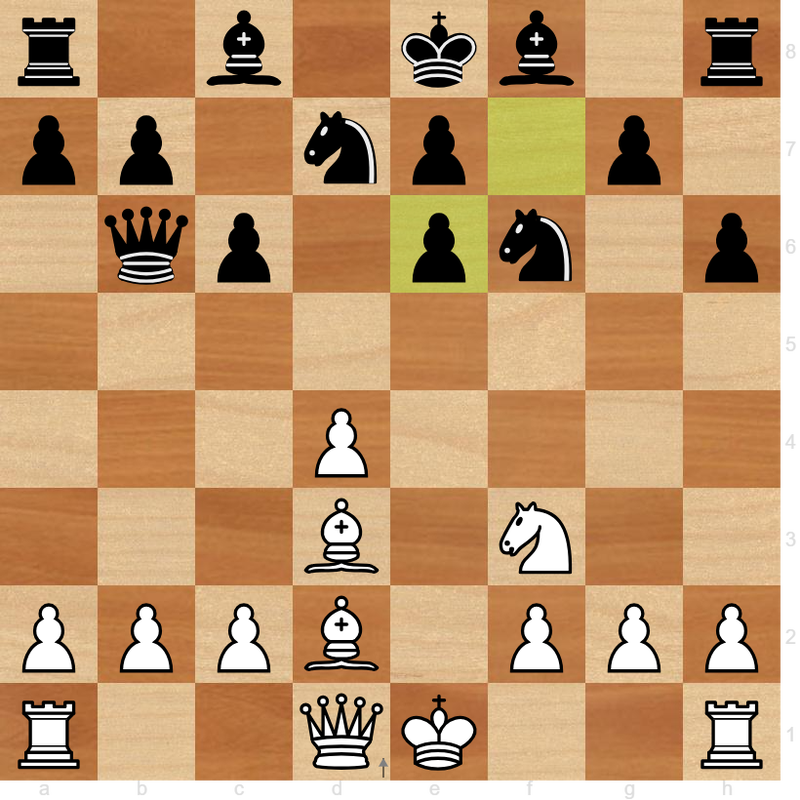
In this position, White is down a minor piece, but has a +3.3 eval. But why? There are no quick mates, no windmill attacks, no grabbing of pawns. Instead, White will remain at -3, -4 and even -6 material way into the game that ended at move 22 with four moves widely considered brilliant by humans who know chess.
Chess theory tells us to develop, castle to safety and attack the enemy king. How does Black castle, though? After a couple of moves the light square bishop is blocked by a knight that can only go backwards. The dark square bishop is blocked by two pawns that cannot move. Let's see what people have tried.
Oll tries c5
Stockfish does not like c5, but it's not like a big drop in eval. The logic is that if White takes, it loses a center pawn and frees a diagonal for a more centralized queen. If White advances, Black undoubles their pawns. If White defends with c3, it loses all initiative, not to mention block their own bishop. If defended by the bishop with Bc3, it is basically equality, a terrible blunder. Similar, but not as bad with Be3.
And if d4 is not defended... Black will move c4. Note that taking would be a terrible blunder due to a common tactic.
Tal replies with the best move: c4! It gets more space, it locks the c5 pawn where it is and give Black a chance to make a mistake. Oll plays cxd4, which Stockfish also doesn't like, but we're not analysing the game here, we're trying to understand what's so good for White in the position, so playing the best SF moves: e5.
I don't know how Tal was thinking about the position, but it takes SF eleven whole moves to get a material advantage for White after forcing Black knights to move around for 5 times!
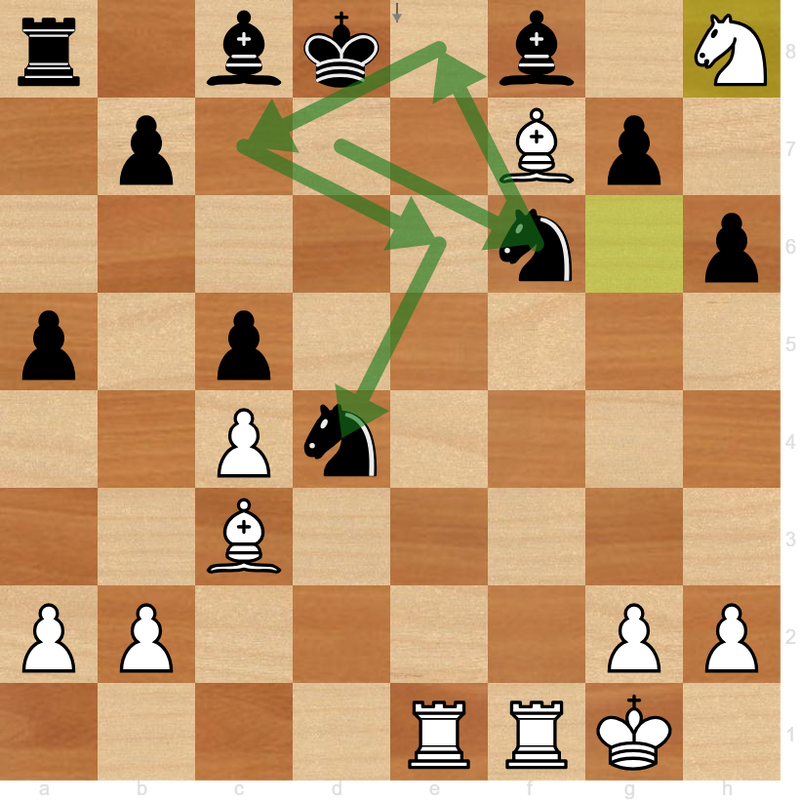
And that's with best play. Did Tal see all that?!
Lichess players try Nd5
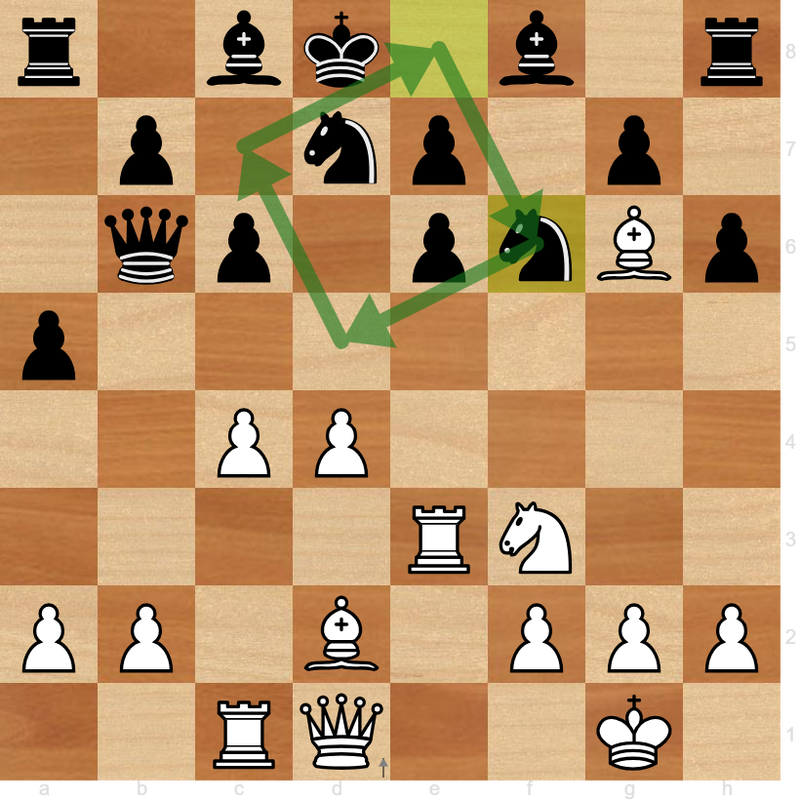
On Lichess, the most played move in the position is Nd5, although on higher ratings is Qc7. Let's see what happens then. Again, the reply is c4, attacking the knight. And Stockfish says "you know what, just leave that knight there and play Qc7. Or a5. Or a6. If you insist to move the knight, just move it back on f6".
It's sad. If you leave the knight there, SF doesn't take it. It doesn't care about your knights. Go ahead, move them around, pretend you're playing chess! There is an absolutely ridiculous computer line, I won't even pretend to understand. Basically, White refuses to take free knights and pawns and instead consolidates, while Black... moves his knight around to the exact same position it started from four moves before!
Lichess players try Qc7
Well, what about Qc7? c4 again! There is nothing Black is able to do. All their pieces are blocked. White has time to calmly advance and consolidate. Stockfish is desperate to develop *anything* so it always tries a5 in order to play Ra6 and get at least a rook in the game. And do you know what it does with it, first thing after it manages to get it out? Gives it away for a chance, just one chance, to undouble those pawns!! And White just leaves it there...
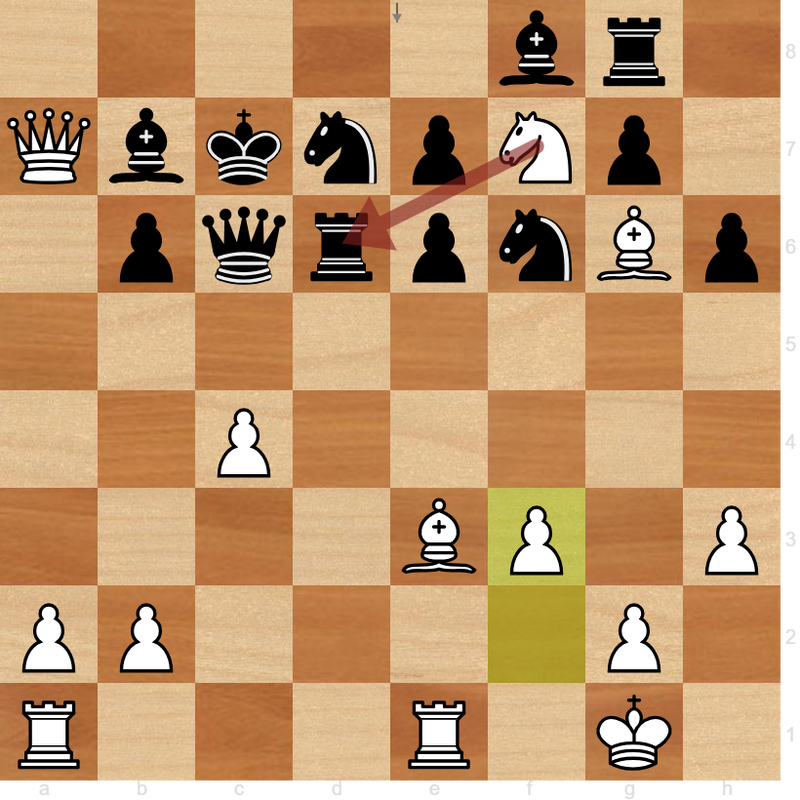
That rook has been there for the last 4 moves (not ply, moves!). You know what's sad? Stockfish, at depth 25, thinks Qc7 is the best move.
Wait, isn't b2 undefended? Qxb2!
You guessed it. c4. And best move from there for Black is queen back to b6. It's humiliating. "OK, got my pawn, have you calmed down now? Go back to your room!".
Even in this variation, White doesn't attack or capture anything. Just calmly consolidates: a4, Re1, Rc1, Qc2, h3, c5.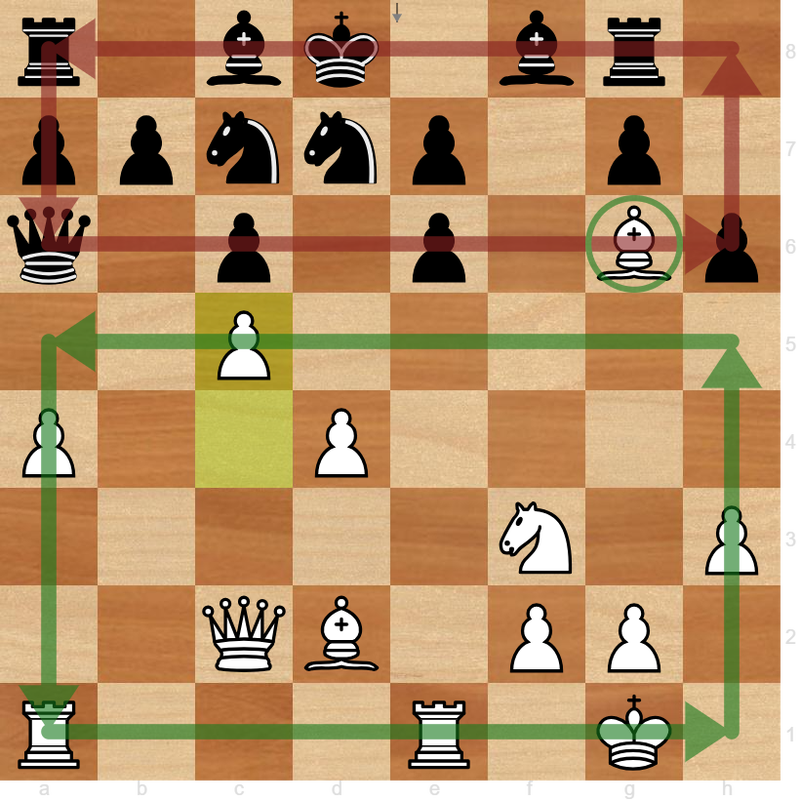
OK, smarty pants, so taking the knight is bad
So what *is* the best move, if not taking that free knight?
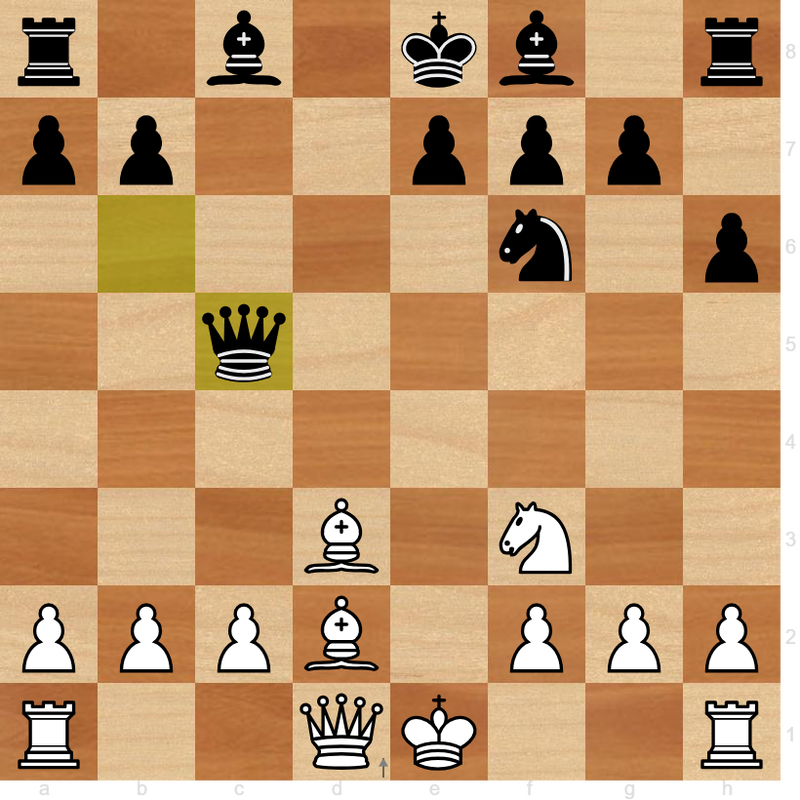
You ready for the big reveal? It's c5. Yes, after lambasting poor Oll for taking the knight and playing c5, I am saying the best move in the position is to NOT take the knight and play c5. g5 is next on the list, but hard to justify, as the bishop cannot develop if White's knight is there and the next move for White is Nxf8 anyway, preventing the short castle forever or forcing the Black knight to get to f8, after a completely unglamourous trip from b8.
So, 9... c5. What happens then? Stuff gets exchanged and we reach a normal almost equal position from which you play chess. It's still slightly better for White, though with equal material.
But why?!
I am not saying that Tal saw all of these lines in his head. He probably intuited that having a centralized king that can't castle, undeployable bishops and double pawns on the e-file will be bad for Black.
In fact, if you use the little /piecevalue command in LiChess Tools, you get this: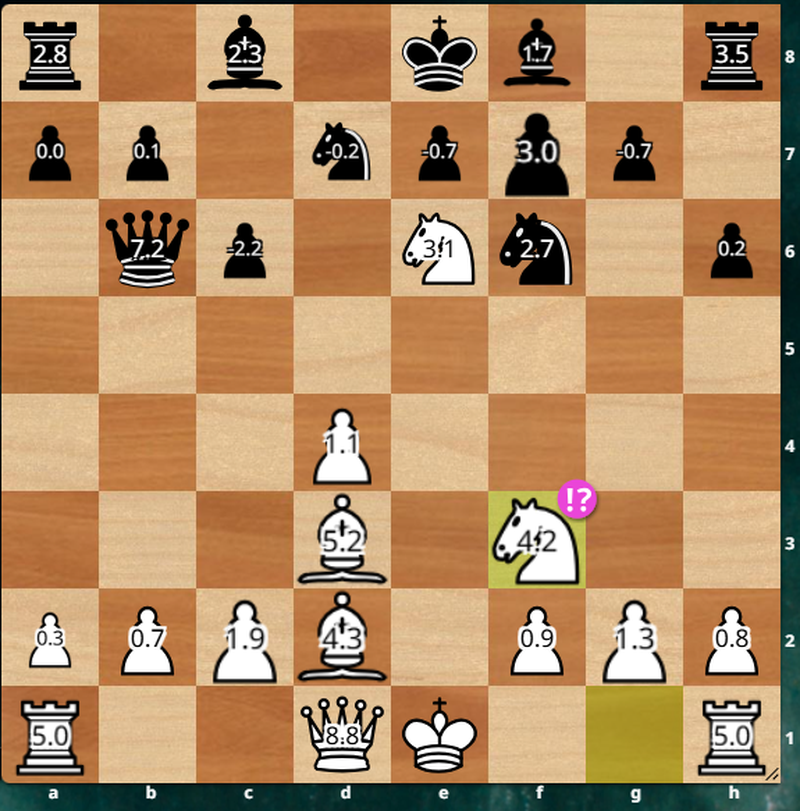
This shows that no pawn has any significant value for Black *except* the one on f7 and three of them would be *better off the board*, especially that shifty little traitor on c6! Same with the knight on d7. And poor Black can't even give it up because capturing it on any of the sacrificial squares would attack another piece and open a dangerous file for White.
It's like those Combat Card Games. Attack cards are great, armor is good, special effects are fun, but Paralyze for a few turns?! Pure gold!
Conclusion
I don't want to be mean to Lembit Oll here, he unfortunately died at just 33 by falling off a window while on antidepressants, but him playing Black here can't have helped...
In this age of computers, even total noobs like me can analyse and comment on games like these, but in 1986 Tal was doing all of this in his head! He probably had a lot of prep, but to intuit or even understand that saccing that knight brings long term total domination of the board without any traps or hidden mates... that is brilliance!
Here is a study, too: https://lichess.org/study/1EQ0s2E
BTW, Igor Smirnov also made a video about this game, check it out. https://www.youtube.com/watch?v=gbak4ix7vZc
You may also like
 GM Avetik_ChessMood
10 Things to Give Up to Enjoy Chess Fully
Discover how embracing a lighter mindset can help you enjoy chess again and achieve better results. FM MattyDPerrine
Why Masters Crush Lower-Rated Players (and You Struggle)
Hint: The secret isn’t a high ceiling TotalNoob69
An unexpected insight on d-pawn pushes/openings
TL;DR; Pushed d-pawns indirectly defend the second rank f square. IM doughnut42
The Sicilian Slayer: Why the Grand Prix Attack Works at Every Level
If you struggle with combating the Sicilian, this post may be for you, especially if you love attack… TotalNoob69
The world didn't end
... yet IM doughnut42