
https://siderite.dev/blog/new-chrome-extension-lichess-tools/
A nice trick in the Zukertort or Hungarian openings (bonus in the Benko Gambit)
It's almost completely unknown and unintuitive and very likely to happen on the board especially at higher ratings.
Intro
I was trying to find some interesting lines in the opening, looking at the Lichess database in the Explorer, enhanced by LiChess Tools so I can also see the evaluation, when I stumbled upon a beautiful line: https://lichess.org/analysis/pgn/1.Nf3+d5+2.g3+c5+3.c4+d4+4.b4+b6+5.bxc5+bxc5+6.Nxd4#0
The move everybody complains about is 4...b6, which is unsound for this position and, indeed, it's the first mistake Black makes. However, I am looking at the games of people rated over 1800, excluding Bullet and Blitz, and b6 is the close second move in the position and it is only losing like 1 point of eval, so not a big blunder.
There is also 2...c5 which is the second most common move in the position, but very close to the first, which is Nf6 and leads to other positions which are very interesting, but outside the scope of this post.
The trap
Let's get back to the position:
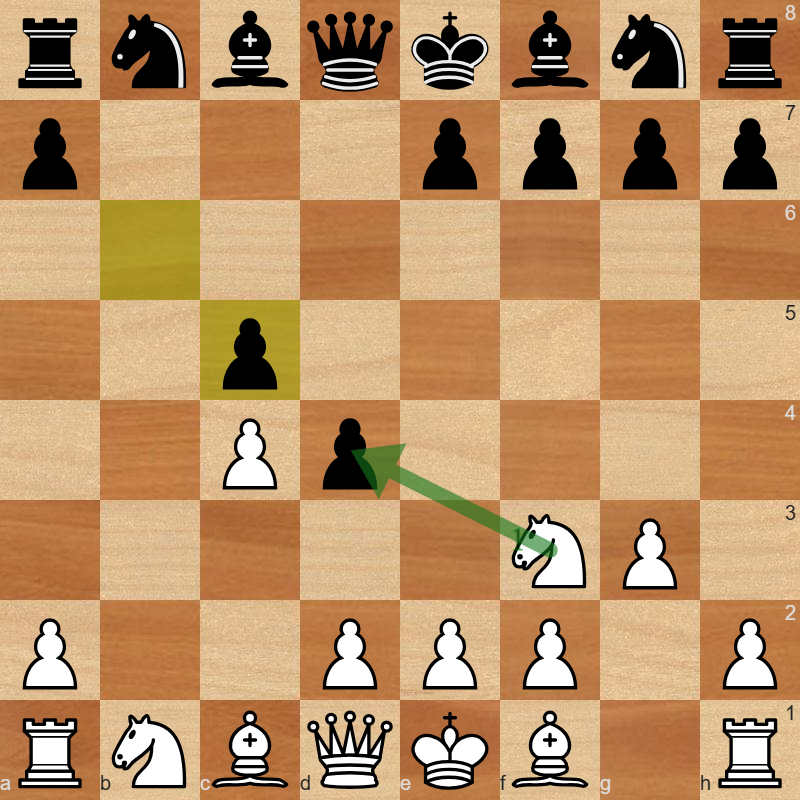
Why take the pawn? Black can take the knight with the pawn and with the queen. Taking with the queen also attacks the unprotected rook. What insanity is this?
Believe it or not, after the knight takes the pawn, eval is +1.7 for White. And that only if they move Bb7, otherwise it's 1.8 and more. It's very easy to make mistakes from that position as Black.
Qxd4
For example, Qxd4 is very tempting. It takes the knight while attacking the rook. Surely White must waste a move to protect it, which means Black is up a piece for nothing. But no, we don't care about the rook. We attack theirs. 7.Bg2 and the eval is +3.3 for all but one move. The best move for Black in this position is 7...Bh3. I mean... who would play this? Even so, the eval is +3 anyway.
Under the rating and time control constraints I outlined above, there are no games in the database, but if you look at all games there are some that reach that position. Indeed, Qxd4 is the most played move, followed by cxd4.
You are probably thinking that Black captures a knight for free, so if our rook is attacked and their rook is attacked, even if we exchange, Black is up a piece. What gives? Well, if Black takes the rook, we don't take theirs at all. We play 8.Nc3 and the queen is in jail. Let's call this the Guantanamo variation :) There is no way for the queen to escape, and that rook of theirs is not going anywhere.
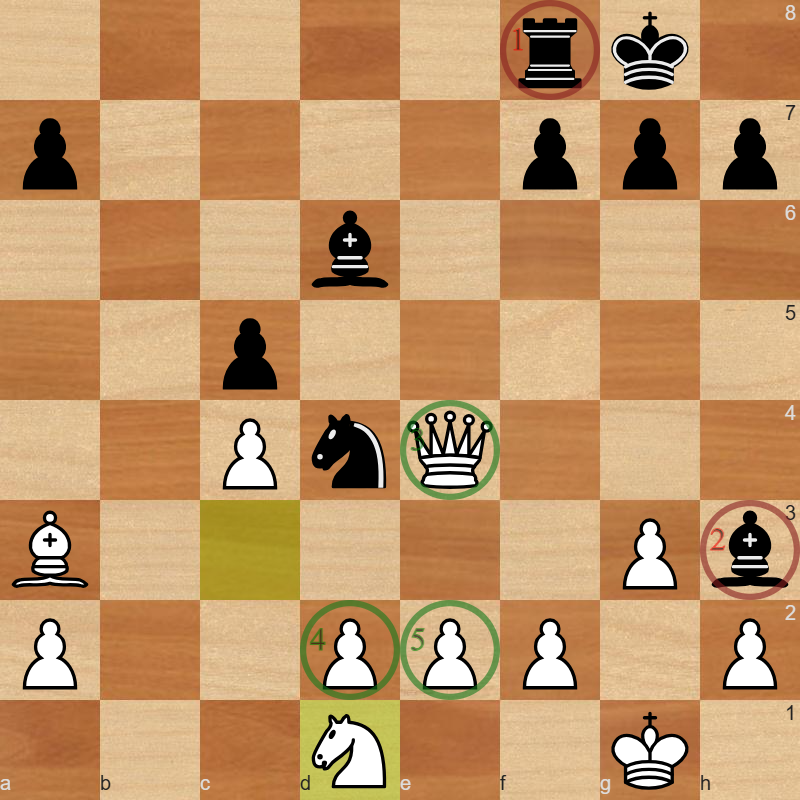
In the final position we have a queen and two (central) pawns for a rook and a bishop.
cxd4
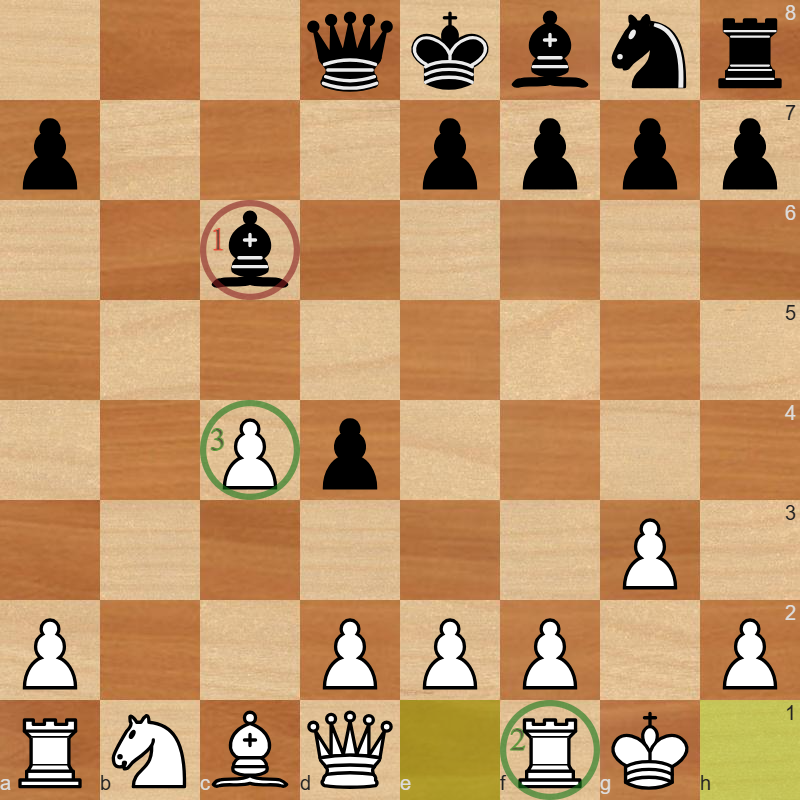
But what about cxd4? Then simply 7.Bg2 traps the rook. The ending position is White having +3 material and +2 eval: https://lichess.org/analysis/pgn/1.Nf3+d5+2.g3+c5+3.c4+d4+4.b4+b6+5.bxc5+bxc5+6.Nxd4+cxd4+7.Bg2+Bd7+8.Bxa8+Nc6+9.Bxc6+Bxc6+10.O-O#12
Bb7
The best way for Black to get out of this situation is to accept the loss of a central pawn and do something like 6...Bb7, attacking our rook, to which we reply with Nf3, defending the rook and the knight at the same time. Eval is +1.6.
Conclusion
The trap value of the position (considering all of the games in the Lichess database) where we get to take the pawn with the knight is 35% (likelihood) * 75% (potency) = 26%, which is not bad at all for a trap. But if you consider 1800+ games, Rapid and above, the trap value is still 27%. And NO ONE at that level played 6.Nxd4 which means this is basically a novelty.
But what if Black doesn't play b6, which is an "obvious" mistake? What if they play 4...cxb4 ? Then what you have is like a reversed Benko Gambit Accepted, which is always fun. The win rate for White from that position is over 50%.
Bonus
But wait a minute! If this is a Benko Gambit reversed, can't we get a similar trap in the Benko? Well, sort of. Take a look at this line: https://lichess.org/analysis/pgn/1.d4+Nf6+2.c4+c5+3.d5+b5+4.b3+bxc4+5.bxc4+g6?color=black#10
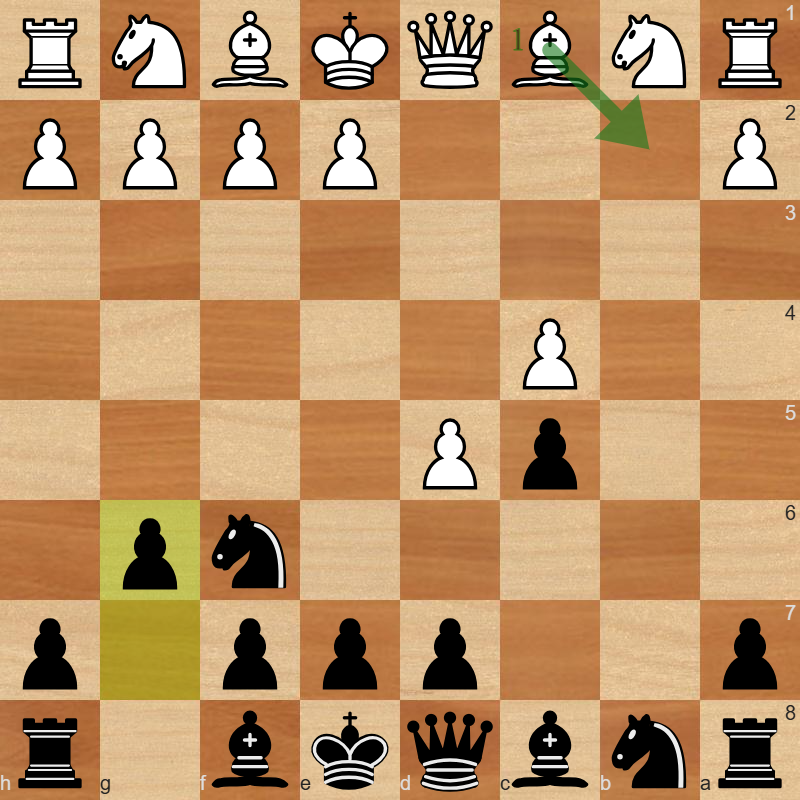
Unfortunately, White has an extra tempo, so it's unlikely to get the same trick. However, from this position, in 1800+ Rapid+ games, Black wins a staggering 62% of the games! So it's a great position anyway.
Hope you like it. Let me know if you ever get to use it.
P.S. Let me know if you like the kind of analysis links I've used here. I could have used a study, but this way people get to the correct variation at all times and can do whatever they want with it. And if you're wondering how I created the links, it's a LiChess Tools feature.
You may also like
 GM Avetik_ChessMood
10 Things to Give Up to Enjoy Chess Fully
Discover how embracing a lighter mindset can help you enjoy chess again and achieve better results. TotalNoob69
How to blog on Lichess
... learn by expressing TotalNoob69
The world didn't end
... yet TotalNoob69
An unexpected insight on d-pawn pushes/openings
TL;DR; Pushed d-pawns indirectly defend the second rank f square. CM HGabor
How titled players lie to you
This post is a word of warning for the average club player. As the chess world is becoming increasin… jk_182