
New Year’s Chess Resolutions
I don’t believe in motivation. I believe in discipline, clarity, and repetition. Playing everything made me weaker—so in 2026, I’m doing the opposite.
The end of the year is a perfect moment to evaluate the past and set new goals in every area of life.
For me, 2025 was an excellent chess year: I crossed 2600 bullet, scored some of the most spectacular wins of my life against GMs, and—equally important—became much more aware of my bad habits. Habits I want to eliminate going forward.
With that in mind, here are the changes I want to introduce into my chess in 2026, in the hope that some of them may also be useful to the reader.
1. Opening Standardization
I am a universal player—I play everything. My opponent never knows whether I’ll hit them with a granite-solid Caro-Kann or a razor-sharp Schliemann, a slow Slav against 1.d4 or an aggressive Classical Dutch. That unpredictability is both my strength and my weakness.
Playing everything often means not playing anything deeply, especially at my level. In bullet, openings are less punishing than in classical chess, but depth still matters.
So I decided to radically narrow my repertoire. I wanted something universal, solid, low on theory, relatively uncommon, not fully explored—yet still tactically dynamic. As philosophers say: know thyself. That applies to chess too.
I settled on a c6–d5–g6–Bg7 hybrid, combining ideas from the Modern Defense and the Caro-Kann: strong light-square control with dynamic bishop play. Its advantages are flexibility (it works against almost anything White plays) and the fact that White doesn’t have a huge range of critical, forcing lines.
With similar logic, as White I chose the Jobava London—not ambitious, but extremely dangerous in blitz and bullet. Fewer lines allow me to know them much more deeply.
In 2026, I will play only these systems, keeping Fischer’s conservative and predictable repertoire in mind as an inspiration.
It’s better to be world-class at a few things than merely very good at everything.
2. Playing Less
Designers say: less is more.
My longest playing session ever lasted 23 hours and 35 minutes, during which I played 817 bullet games. These marathons are harmful: fatigue leads to poor performance, frustration follows, and large rating swings become inevitable—slowing long-term progress.
In the new year, I will limit myself to 60 minutes of play per day.
We play chess to enjoy it, not to burn ourselves out.
3. More Endgames
The endgame is the soul of chess. Everything leads toward the fight for a favorable endgame position.
This year, I plan to dedicate more time to study—especially Dvoretsky’s Endgame Manual. Whenever I worked with it in the past, I felt better piece coordination, more harmony, and overall stronger play.
This time, I want to do it properly: page by page, on a real board, in a slightly vintage way. I’m convinced the benefits will be significant.
4. Progress and Philosophy, Not Rating
In the new year, I want to focus on sharp, dynamic chess, not rating gains. I want to forget the number and enjoy the game itself—advice I’ve received from several GMs.
As difficult as that is, it’s also liberating. I believe it leads to deeper understanding, less obsession, and more genuine satisfaction.
5. No Cheap Tricks
Cheap moves like Bh6 in the Modern or Ba6 against the English often work in bullet—but they damage the aesthetic of chess.
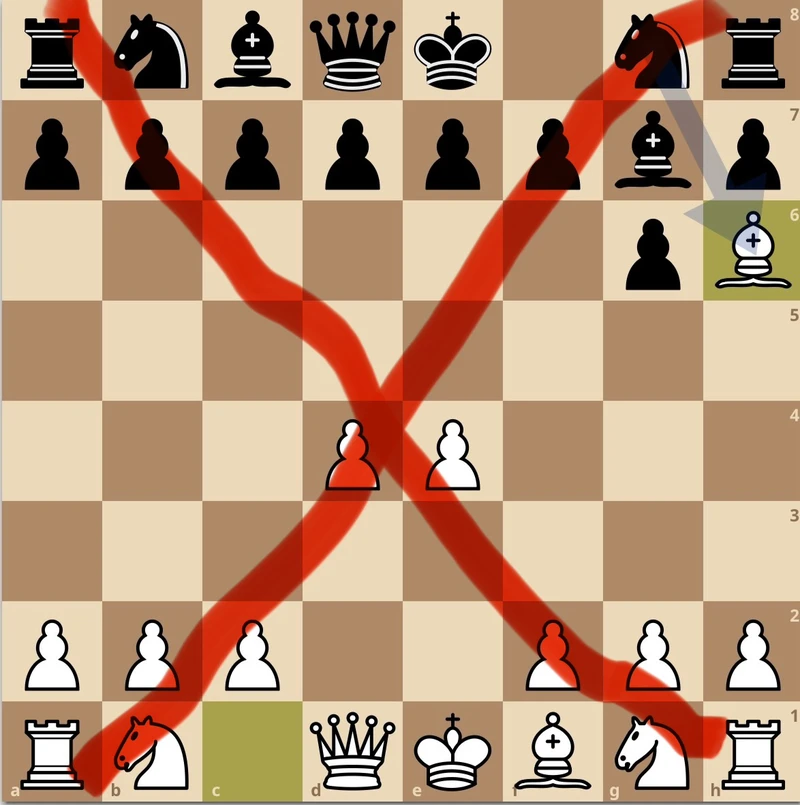
I won’t use them in the new year, unless the opponent is clearly abusing premoves and clock chaos.
6. Considering OTB Play
I haven’t played an OTB tournament in a long time, especially classical chess. I’m primarily a bullet specialist—but I will seriously consider returning to OTB play this year.
You may also like
 RuyLopez1000
AI Slop is Invading the Chess World
Claiming that AI can teach chess is the latest fad CkickyCheck
There Are No Good Anti-Scandinavians
You must accept the Scandi! CM HGabor
How titled players lie to you
This post is a word of warning for the average club player. As the chess world is becoming increasin… IM datajunkie
Why your tactics aren’t improving
The 4 fixes that can help you become a tactician IM NikolaN98
Top 5 Mistakes You Should Avoid in Your Games
Improvement in chess doesn’t always come from learning more openings or memorizing longer lines, it … BocoPacer