
Lichess
Why do you suck at King of the Hill?
King of the Hill: Bongclouding Attack! Oh! A Miserable Blunder!
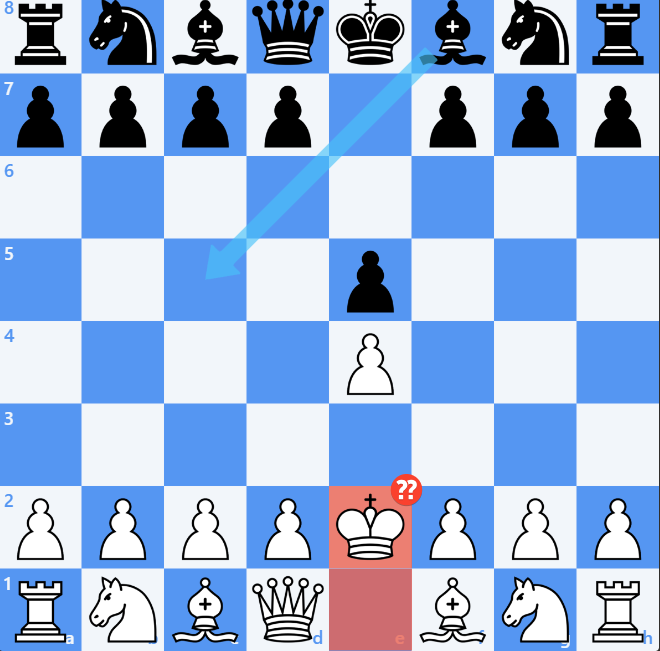
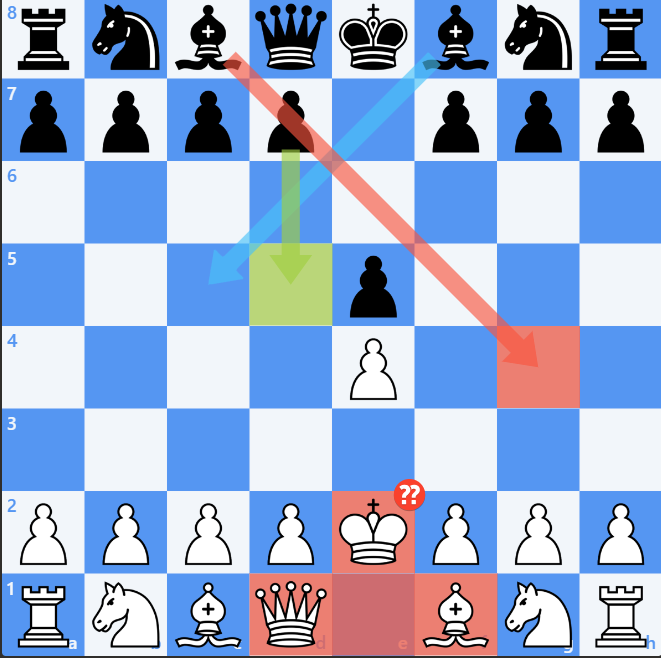
The images above show what is the Bongcloud and why it's a blunder.
What is King Of The Hill?
King of the Hill is not just another chess variant—it’s a battle for the center, where victory comes from marching your king boldly onto e4, d4, e5, or d5. Unlike classical chess, where the king hides behind pawns and waits for the endgame, KoTH flips the script: the monarch becomes both weapon and target from move one. This changes the value of openings dramatically. Moves that weaken king safety, like the Bongcloud, aren’t just bad—they’re catastrophic, because in KoTH the king’s journey to the center must be timed with precision, supported by development, and shielded from ambush. Understanding this twist is the key to mastering the variant and avoiding the traps that make players “suck” at King of the Hill.
The Position above is Bongcloud: Blunder ??.
History
In 2008 a Chess.com user by the handle Lenny_Bongcloud came to notoriety for beginning every game with 1.e4 & 2. Ke2 with White, and 1...e5 & 2...Ke7 with Black (and is still doing so as of November 2025). After him, Chess.com users christened 2. Ke2 the "bongcloud", a name, we suppose, that has something to do with drugs, but as good little chess players we wouldn't know anything about that.
In 2010 Andrew Fabbro wrote a tongue-in-cheek book on the opening, Winning with the Bongcloud, dedicated to Lenny_Bongcloud. The book is a parody of overwritten chess opening repertoire literature. Fabbro invented spurious defences with chess jargon names ("...Ke7! This inaugurates the Bongcloud Counter-Gambit, and play often leads to the very sharp Marijanezy Bind, after 3. g4 g5 3. Kf3!") and recommended it for people whose "current repertoire is too drawish" or who "can't afford the full version of ChessBase and want an opening where all known games will fit in ChessBase Light's 32,000-game limit."
Hikaru Nakamura is largely responsible for popularising the joke with a wider audience. In 2020 Nakamura made a new Chess.com account to stream playing the opening exclusively (and, of course, winning with it, because he's a super-GM). In 2021, Magnus Carlsen and Nakamura made headlines when they played the following game: 1. e4 e5 2. Ke2 Ke7 3. Ke1 Ke8 4. Ke2 Ke7 5. Ke1 Ke8 6. Ke2 Ke7 ½-½
References
See also
Why is it a blunder???
What is the Bongcloud?
• The Bongcloud Opening usually starts with:
1. e4 e5
2. Ke2
• Instead of developing pieces, White moves the king early, breaking the golden rule of not exposing your king in the opening.
Why It’s a Blunder
• Loss of Castling Rights: By moving the king, White can no longer castle, which is a huge defensive disadvantage.
• King Safety: The king is awkwardly placed on e2, vulnerable to checks and attacks.
• No Development: While the king wanders, pieces like knights and bishops remain undeveloped.
• Easy Targets: Opponents can quickly gain tempo by attacking the exposed king while developing their own pieces.
On Lichess, the analysis engine often marks this as a blunder because it violates basic principles of opening play.
Why People Still Play It
• Humor and Meme Value: Streamers like Hikaru Nakamura popularized it as a joke.
• Psychological Weapon: Sometimes used to confuse or tilt opponents.
• Style Points: Winning with the Bongcloud is seen as “flexing” because you’re handicapping yourself deliberately.
️ Verdict
The Bongcloud Attack is not a serious opening—it’s a deliberate blunder. Engines and databases confirm it loses advantage immediately. But in casual play, it’s a fun way to troll, joke, or challenge yourself.
So, we can say:
Layers of the Bongcloud Blunder
1. Principle Violation
• In chess, the opening is about development, center control, and king safety.
• Bongcloud breaks all three at once:
• King moves instead of developing pieces.
• Center pawns are left unsupported.
• Castling rights vanish instantly.
It’s like starting a math puzzle by erasing the rules before solving it.
2. Engine’s Harsh Judgment
• On Lichess, Stockfish marks 2. Ke2 as a blunder because evaluation drops drastically.
• Example: After 1. e4 e5 2. Ke2, the engine might swing from equality (0.0) to -2.0 or worse, meaning Black is already winning.
3. Psychological Trick
• Some players use Bongcloud to confuse opponents.
• It’s like giving someone a riddle with nonsense clues—if they panic, they might still lose despite your blunder.
• But against strong players or engines, it’s hopeless.
4. Why It’s Still Famous
• Streamers like Hikaru Nakamura made it a meme.
• Winning with Bongcloud feels like solving a puzzle with deliberately wrong steps—style points only.
• On Lichess, it’s a badge of humor, not of skill.
Final Thought
The Bongcloud is a self-imposed handicap. Engines call it a blunder, coaches call it nonsense, but communities call it fun. It’s proof that chess isn’t just about perfection—it’s also about creativity, trolling, and laughter.
Bongcloud Mystery Mode
Level 1: The Obvious Blunder
• Move: 2. Ke2
• Riddle: “What disappears forever when the king walks too soon?”
• Answer: Castling rights vanish.
Level 2: The Hidden Trap
• Move: King on e2.
• Riddle: “What piece becomes a shield but also a prison?”
• Answer: The king blocks the bishop on f1, slowing development.
Level 3: The Engine’s Verdict
• Stockfish says: -2.0 evaluation.
• Riddle: “What number tells you you’re already losing before the battle begins?”
• Answer: The negative evaluation score.
Level 4: The Meme Power
• Community says: “It’s funny!”
• Riddle: “What makes a blunder into a legend?”
• Answer: Humor, trolling, and streamer culture.
Big Picture
The Bongcloud is a deliberate blunder, but it survives as a cultural puzzle—a move that makes no sense in chess logic but thrives in humor logic. On Lichess, it’s marked red as a blunder, yet in the community, it’s green as a meme.
This game below shows why it's a blunder:
How do you play?
This is how you play KOTH (abbreviation of King Of The Hill).
Keep it simple by not exposing your King to devastating attacks.

